
Course Overview
Wilderness First Responder (WFR)
An 80-100 hour wilderness medicine program for outdoor professionals
See Upcoming CoursesCourse Overview
The Wilderness First Responder (WFR) course is for outdoor professionals and anyone who works, travels, or leads extensively in remote environments where access to definitive medical care is delayed or unreliable.
This comprehensive 80- to 100-hour program goes far beyond basic first aid to provide in-depth training in patient assessment, emergency medical and trauma management, long-term patient care strategies, incident leadership, and critical evacuation decision-making. You'll develop the judgment and practical skills needed to manage complex emergencies with limited resources.
A WFR certification is the recognized industry standard for wilderness guides, outdoor educators, search and rescue personnel, expedition leaders, and serious outdoor adventurers undertaking extended trips in remote areas.
Who Should Take This Course
- Wilderness guides (hiking, climbing, rafting, mountaineering)
- Outdoor educators and program directors
- Search and rescue team members
- Expedition leaders and trip organizers
- Camp directors and senior outdoor staff
- Serious adventurers on extended remote trips
Professional Development
WFR certification often fulfills continuing education requirements for various professions. Check with your licensing body regarding applicability to your field.
The WFR is the recognized industry standard credential for:
- Wilderness guide certifications and outfitter licensing
- Outdoor education program requirements
- Search and rescue team membership
- Expedition and overseas adventure travel leadership
- Park ranger and land management positions
What's Included & Certifications
Unlike other WFR courses that charge separately, registration with WFANYC includes all materials and three official certifications from Desert Mountain Medicine upon successful completion:
- 80-100 hours of expert instruction
- Comprehensive Desert Mountain Medicine course manual
- All training materials and supplies
- WFR, CPR/AED, and WAT certifications
- Digital certification cards
- Access to online resources and alumni network
- Small class sizes for personalized attention
Certifications Included
Curriculum Modules
Systematic approaches to patient evaluation, critical thinking frameworks, recognizing and intervening in life-threatening conditions, ongoing patient monitoring, and documentation in remote settings.
- Comprehensive CPR/AED training (Adult/Child/Infant)
- Advanced airway management techniques
- Rescue breathing and ventilation support
- Wilderness-specific modifications to BLS protocols
- Team coordination during resuscitation
- Severe bleeding control and hemostatic agents
- Shock assessment and management
- Head injuries and traumatic brain injury evaluation
- Chest trauma and respiratory compromise
- Abdominal injuries and internal bleeding recognition
- Spinal cord injury assessment and immobilization
- Advanced wound care and infection management
- Complex musculoskeletal injuries
- Advanced splinting and immobilization techniques
- Severe hypothermia management and rewarming strategies
- Heat stroke treatment and cooling techniques
- Altitude illnesses: AMS, HAPE, HACE recognition and treatment
- Lightning injuries and electrical trauma
- Drowning and near-drowning management
- Frostbite and non-freezing cold injuries
- Wilderness toxicology: snakebites, arthropod envenomation, poisonous plants
- Cardiovascular emergencies in remote settings
- Respiratory distress and asthma management
- Neurological emergencies: seizures, stroke, altered mental status
- Abdominal emergencies and acute abdomen
- Severe allergic reactions and anaphylaxis (WAT included)
- Diabetes management and complications
- Infectious diseases and fever management
- Extended care strategies when evacuation is delayed
- Patient monitoring over hours or days
- Fluid and nutrition management
- Medication administration basics
- Improvisation techniques with limited resources
- Psychological support and crisis intervention
- Evacuation decision-making frameworks
- Communication with rescue services and dispatch
- Helicopter operations and landing zone preparation
- Patient packaging and transport considerations
- SAR interface and incident management
- Documentation and handoff procedures
- Leading in high-stress emergency situations
- Effective communication under pressure
- Managing group dynamics during crises
- Risk management and prevention strategies
- Ethical considerations in wilderness medicine
- Psychological First Aid
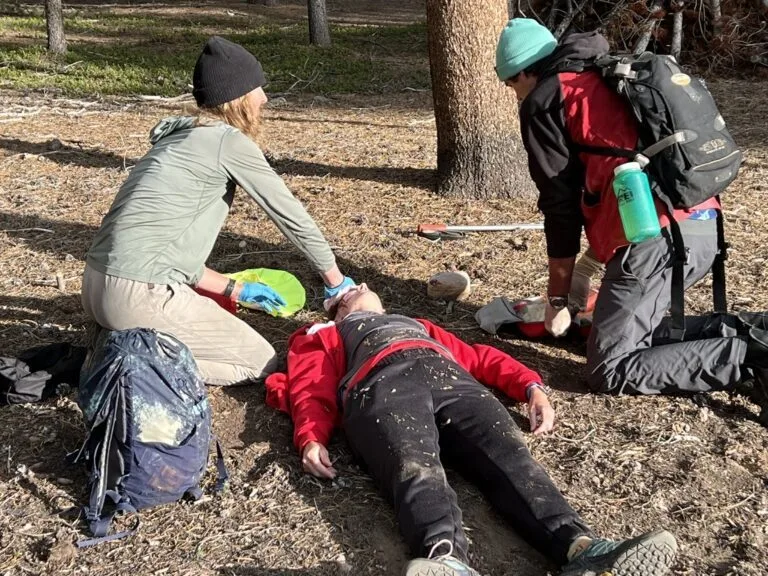
Extensive hands-on practice through realistic, complex emergency simulations. You'll work through multi-patient incidents, prolonged care scenarios, and challenging decision-making situations that mirror real backcountry emergencies.
What You'll Learn
Master comprehensive evaluation techniques for complex medical and trauma emergencies. Learn to conduct thorough patient assessments, identify subtle signs of serious conditions, and monitor patients over extended periods.
Develop proficiency in managing severe trauma, environmental emergencies, and medical crises. Learn advanced treatment techniques, improvised medical material strategies, and long-term patient care in austere environments.
Build critical thinking skills for making sound evacuation decisions, managing limited resources, coordinating with rescue services, and leading effectively during prolonged emergencies.